Steam Heat & Radiator Repair in Sheepshead Bay, Brooklyn
Cast-iron radiators provide comfortable, radiant warmth when functioning properly, but single-pipe and two-pipe steam systems require delicate physical balancing. When property owners require expert radiator repair Sheepshead Bay Brooklyn technicians, NY Plumbing troubleshoots stubborn cold spots, spitting air vents, leaking valve stems, and disruptive pipe hammer.
Throughout Sheepshead Bay, Gerritsen Beach, and Manhattan Beach, residential homes constructed from the 1920s through the 1960s rely on heavy cast-iron radiators connected to basement boilers. When one room stays freezing while another overheats, or pipes rattle aggressively through floors, targeted mechanical adjustments restore quiet, uniform heat. Call (315) 202-8009 to speak with our heating specialists.
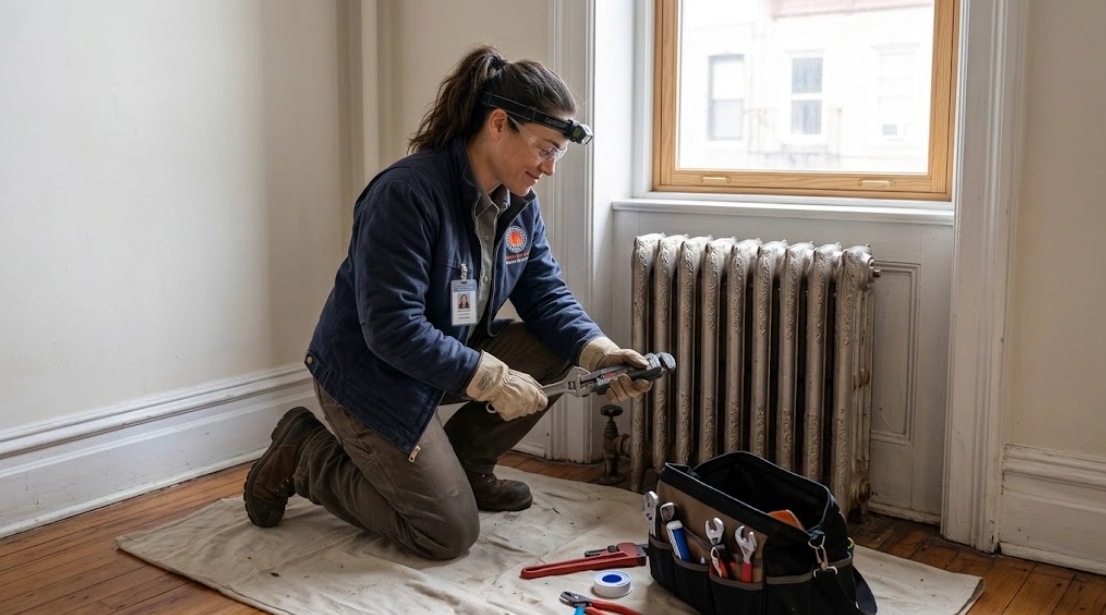
Servicing cast-iron radiator supply valves and replacing thermostatic air vents eliminates water leaks and restores balanced room temperatures.
Signs of Steam Radiator Malfunctions
Because steam heating relies on natural thermodynamic pressure and gravity condensate return, subtle component defects immediately impair room comfort:
- Cold Radiator While Boiler Runs: The radiator body remains cold to the touch because trapped air cannot escape through a blocked vent.
- Violent Banging and Clanging in Pipes: Known as banging steam pipes Sheepshead Bay Brooklyn residents frequently endure, caused by high-speed steam slamming into trapped pooling water.
- Hissing, Whistling, or Spitting Water: Steam vents that spit brown rusty water onto hardwood floors or hiss continuously without closing.
- Water Leaking Around the Supply Valve: Leaks dripping from the valve stem packing nut or union spud when the valve is turned.
- Uneven Heating Across Building Zones: Radiators closest to the boiler overheat rapidly while top-floor bedrooms take hours to receive heat.
Understanding How One-Pipe Steam Radiators Function
In a typical single-pipe steam system, steam and water condensate travel through the exact same pipe in opposite directions:
Steam Inflow Dynamics
When the boiler fires, steam expands through main basement pipes and rises through vertical risers. As it pushes into the radiator, it displaces cold air out through the small air vent on the side. Once steam reaches the vent, heat expands an internal alcohol-filled bellows or bi-metallic disc, snapping the vent shut to contain steam.
Condensate Drainage Requirements
As steam transfers its heat into the cast-iron metal, it condenses back into liquid water. Gravity must carry this water back out through the bottom supply valve and down the pipe into the boiler. If the radiator does not pitch slightly downward toward the valve, water pools, blocking incoming steam and creating violent water hammer.
Radiator Valve Repair & Stem Packing
The heavy brass valve located at the base of your radiator regulates heating flow. A common issue is a leaking valve stem when turned on or off. Our technicians perform precise steam radiator valve replacement Sheepshead Bay Brooklyn services, repacking old valve stems with fresh graphite or Teflon packing material, or replacing stripped valve spuds using heavy-duty radiator spud wrenches without damaging cast-iron threads. Remember: on one-pipe steam radiators, the supply valve must always be fully open or fully closed—never throttled halfway.
Resolving Banging Steam Pipes & Water Hammer
Water hammer is not just an annoying noise; the intense hydraulic pressure spikes can crack cast-iron radiator castings, loosen copper solder joints, and damage boiler sections. We eliminate water hammer by:
- Correcting Radiator Pitch: Placing durable shims beneath radiator feet to establish a minimum 1/4-inch slope toward the supply valve so condensate drains freely.
- Tuning Boiler Operating Pressure: Verifying the boiler pressuretrol is set low (cut-in at 0.5 psi, differential at 1 psi). High pressure slows condensate return and creates water hammer.
- Clearing Blocked Returns: Flushing clogged wet return lines in the basement that cause condensate to back up into vertical risers.
- Main Vent Servicing: Replacing oversized or defective quick-vents on basement steam mains to relieve riser backpressure.
Balancing Multi-Floor Heating Systems
In two-story homes and multi-family walk-ups, unbalanced heating is a frequent complaint. By installing properly calibrated, adjustable air vents on each radiator, we control the venting speed of each room. Fast vents on distant upper-floor radiators allow steam to reach cold bedrooms quickly, while slower vents on radiators near the boiler prevent ground-floor rooms from overheating.
Cost Factors Influencing Radiator Repairs
Repair costs depend on whether the issue requires simple air vent replacement, pitch correction, valve stem repacking, complete supply valve replacement, or clearing obstructed return piping in the basement. We explain all required procedures clearly before any work begins.
Explore Related Plumbing & Heating Services
Radiator efficiency is closely linked to your central heating infrastructure:
- Boiler Repair: Comprehensive diagnostics and repairs for steam and hot-water heating plants.
- Boiler Replacement: Upgrading cracked or obsolete heating equipment with modern boilers.
- Water Heater Repair: Servicing domestic hot water tanks and boiler indirect coils.
- Drain Cleaning: Clearing basement drains and plumbing stacks.
- Service Areas: Learn about our coverage in Sheepshead Bay, Manhattan Beach, and Gerritsen Beach.
Frequently Asked Questions About Radiator Repair
In a steam heating system, air must escape from the radiator through the air vent before steam can enter. If the radiator vent is stuck closed with mineral deposits or paint, air remains trapped inside, completely blocking steam flow. Installing an appropriately sized, adjustable replacement air vent allows steam to enter and restores balanced heating.
Banging pipes—known as water hammer—occur when steam collides with pooled condensate water in the pipe or radiator. In one-pipe steam systems, this is often caused by an incorrect radiator pitch that prevents water from draining backward, a partially opened shutoff valve that restricts flow, or excessive steam boiler operating pressure.
A hissing or spitting air vent indicates either a worn internal float mechanism that fails to seal when steam reaches it, or a waterlogged radiator caused by boiler surging, dirty boiler water, or improper pitch. Replacing the defective air vent and correcting drainage resolves the leak.
Yes. Most radiator shutoff valves can be serviced by repacking the valve stem gland with fresh graphite packing or replacing the internal valve spud and assembly without removing the cast-iron radiator itself.