Gas Line Repair & Inspection in Sheepshead Bay, Brooklyn
Natural gas powers essential residential comfort systems, including heating boilers, domestic water heaters, clothes dryers, and kitchen ranges. When property owners require dependable gas line repair Sheepshead Bay Brooklyn services, NY Plumbing delivers code-compliant diagnostic testing, valve replacements, and safety evaluations.
Whether your home features threaded black iron piping, corrugated stainless steel tubing (CSST), or copper appliance drops, gas infrastructure demands uncompromising technical precision and strict adherence to New York City Fuel Gas Code standards. Call (315) 202-8009 to speak with our plumbing team regarding planned piping projects or system assessments.
CRITICAL GAS SAFETY INSTRUCTION
If you smell natural gas (a rotten-egg sulfur odor) or suspect an active gas leak: Leave the building immediately! Do not operate light switches, electrical appliances, or doorbells. Do not use phones inside the structure. Do not smoke or use open flames. From a safe outdoor location, immediately call National Grid (1-718-643-4050) or dial 911. Never attempt to locate or repair a gas leak yourself.
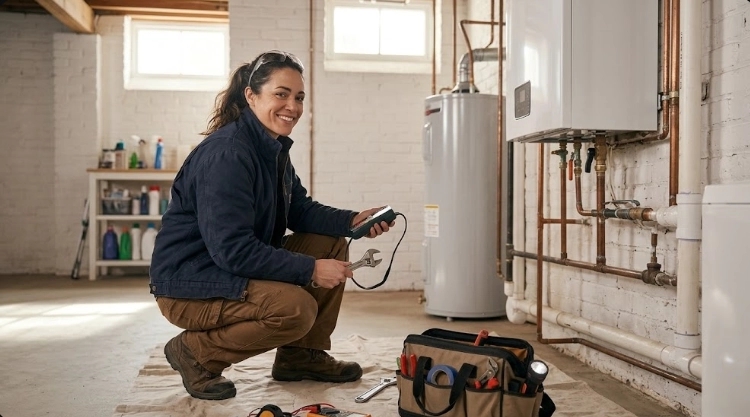
Calibrated electronic gas sniffer meters and pressure testing verify tight threaded pipe joints and safeguard residential boiler rooms.
Signs Your Gas Piping Requires Professional Inspection
Gas infrastructure must be inspected promptly if any of the following symptoms occur:
- Faint or Intermittent Sulfur Odor Near Appliances: A slight rotten-egg scent lingering near boiler manifolds, water heater burners, or kitchen ranges.
- Hissing or Whistling Sounds: Hearing high-pressure gas hissing from a shutoff valve, regulator, or threaded union connection.
- Utility Red-Tag or Service Lockout: National Grid has shut off the gas meter and applied a red tag following an emergency response or suspected pressure loss.
- Visible Surface Rust & Corrosion: Gas pipes running through damp basement areas exhibiting heavy flaking rust, particularly near floor penetrations.
- Delayed Burner Ignition: A distinct "poof" sound or mini-explosion when the boiler or furnace fires up, indicating burner manifold pressure irregularities.
Professional Gas Piping Assessment & Pressure Testing
Locating tiny micro-leaks and certifying line integrity requires structured technical testing:
Electronic Sniffer Detection
Technicians use sensitive digital combustible gas detectors to scan along every foot of exposed black iron piping, union joints, regulator vents, and appliance shutoffs to detect trace methane emissions before they reach combustible levels.
Gas Piping Pressure Testing
A formal gas piping inspection Sheepshead Bay Brooklyn testing procedure isolates the piping system, pressurizes it with compressed air or nitrogen, and monitors a high-precision diaphragm pressure gauge over a designated test period to verify zero pressure decay.
Gas Line Installation for Stoves, Dryers & Boilers
Remodeling a kitchen or replacing an old electric range requires professional pipe installation. A gas line installation for stove Sheepshead Bay Brooklyn project involves extending black iron supply piping from the primary gas manifold, installing an approved quarter-turn ball shutoff valve within arm's reach of the appliance, and connecting a certified flexible stainless-steel gas connector. We ensure pipe diameters supply adequate cubic feet per hour (CFH) to support the BTU firing demands of high-output ranges and modern heating boilers without starving neighboring fixtures.
NYC Local Law 152 Gas Piping Inspections
Under New York City Local Law 152 (LL152), all buildings containing three or more residential units (or commercial spaces), classified outside the R-3 single-family and two-family occupancy group, must undergo a mandatory periodic gas piping inspection once every four years. Inspections must be conducted by or under the direct supervision of a Licensed Master Plumber (LMP).
The LL152 inspection examines all exposed gas piping from the point of building entry up through public corridors, mechanical rooms, boiler areas, and riser spaces, checking for uncertified flexible connections, illegal tap-ins, active gas leaks, missing safety valves, and excessive corrosion. We help property managers, co-op boards, and building owners navigate compliance schedules, filings with the Department of Buildings, and required corrective repairs.
Restoring Service After a Utility Gas Shutoff
When a gas utility locks a meter due to an odor call or failed pressure test, restoring gas service is a rigorous process in NYC. The entire building gas system must typically be brought up to current code standards, all leaks must be identified and corrected, a formal DOB work permit must be filed, and an official high-pressure integrity test must be witnessed by a city inspector or utility representative before National Grid unlocks the meter. We assist owners through every step of this restoration process.
Cost Factors Influencing Gas Piping Work
Gas piping costs depend on pipe run length, pipe diameter (from 1/2-inch appliance lines up to 2-inch commercial boiler supplies), accessibility through finished ceilings or basement mechanical spaces, valve counts, and whether DOB permitting and utility coordination are required. We outline all project requirements transparently.
Explore Related Heating & Plumbing Services
Gas piping is the fuel foundation for your home's central heating:
- Boiler Repair: Keep your gas-fired heating boiler operating safely and efficiently.
- Boiler Replacement: Oil-to-gas conversions and high-efficiency boiler installations.
- Water Heater Repair: Burner diagnostics and repairs for gas-fired hot water tanks.
- Sewer Line Repair: Video camera evaluations and sewer pipe replacements.
- Service Areas: Learn about our coverage in Sheepshead Bay, Gerritsen Beach, and Manhattan Beach.
Frequently Asked Questions About Gas Line Repair
If anyone smells gas, they must leave the building immediately and call their gas utility (National Grid in Brooklyn at 718-643-4050 or 911) from a safe outdoor location. Do not operate light switches, do not use phones indoors, do not ring doorbells, and never attempt to locate or repair the gas leak yourself.
Local Law 152 requires periodic inspection of exposed gas piping systems in New York City buildings (except single-family and two-family homes classified as R-3). Inspections must be performed by or under the direct supervision of a Licensed Master Plumber once every four years based on the building's community district cycle.
Technicians use calibrated electronic combustible gas sniffers to detect micro-leaks around threaded black iron fittings, followed by non-corrosive bubbling detection solution to visually confirm pinholes. For full line certification, the system is pressurized with inert gas and monitored on a calibrated pressure gauge.
No. In New York City, all gas piping alterations, valve replacements, and appliance installations must comply with strict NYC Fuel Gas Code standards and must be performed by qualified, licensed professionals with required Department of Buildings permits.